

-
×
 Fluent - Laëticia Donval
1 × 17,00 €
Fluent - Laëticia Donval
1 × 17,00 € -
×
 9 octobre 1977 - Roberto Varlez
1 × 5,00 €
9 octobre 1977 - Roberto Varlez
1 × 5,00 € -
×
 À partir de n°3 - Collectif
1 × 15,00 €
À partir de n°3 - Collectif
1 × 15,00 € -
×
 Revue La Ronde n°14
1 × 3,00 €
Revue La Ronde n°14
1 × 3,00 € -
×
 Alma Mater n°1
2 × 12,00 €
Alma Mater n°1
2 × 12,00 € -
×
 Un essai sur la typographie - Eric Gill
1 × 17,00 €
Un essai sur la typographie - Eric Gill
1 × 17,00 € -
×
 Le Gabion - Théo Robine-Langlois
1 × 16,00 €
Le Gabion - Théo Robine-Langlois
1 × 16,00 € -
×
 Sillo n°3 - Le Fauve
1 × 12,00 €
Sillo n°3 - Le Fauve
1 × 12,00 € -
×
 Saint Julien l'hospitalier Tome 3 - Claire Pedot
1 × 25,00 €
Saint Julien l'hospitalier Tome 3 - Claire Pedot
1 × 25,00 € -
×
 D’l’or - Rosanna Puyol Boralevi
1 × 16,00 €
D’l’or - Rosanna Puyol Boralevi
1 × 16,00 € -
×
 Good Company - Paul Van der Eerden
1 × 15,00 €
Good Company - Paul Van der Eerden
1 × 15,00 € -
×
 Rue Englelab, La révolution par les livres - Iran 1979 - 1983 - Hannah Darabi
1 × 48,00 €
Rue Englelab, La révolution par les livres - Iran 1979 - 1983 - Hannah Darabi
1 × 48,00 € -
×
 Retour d'y voir - n° 1 & 2 - Mamco
1 × 20,00 €
Retour d'y voir - n° 1 & 2 - Mamco
1 × 20,00 € -
×
 Photographic Fields - Joël Van Audenhaege
1 × 25,00 €
Photographic Fields - Joël Van Audenhaege
1 × 25,00 € -
×
 Der Erste Rotkehlchen - Le livre
1 × 17,00 €
Der Erste Rotkehlchen - Le livre
1 × 17,00 € -
×
 Aurore Colbert - Marie Mons
1 × 38,00 €
Aurore Colbert - Marie Mons
1 × 38,00 € -
×
 Gruppen n°14 - Collectif
1 × 15,00 €
Gruppen n°14 - Collectif
1 × 15,00 € -
×
 Optical Sound 3
1 × 15,00 €
Optical Sound 3
1 × 15,00 € -
×
 Sans titre - Benjamin Hartmann
1 × 12,00 €
Sans titre - Benjamin Hartmann
1 × 12,00 € -
×
 Les glaciers - Lorraine Druon
1 × 10,00 €
Les glaciers - Lorraine Druon
1 × 10,00 €


Rosé #01


15,00 €
Intended to be a space for queer artists, queer art and queer themes, Rosé puts the works at its center.
Plus que 1 en stock
Rosé is a queer art zine, edited by Ben Egger and Sarah Berger, that aims to provide a curated public platform for queer artistic perspectives and concerns.
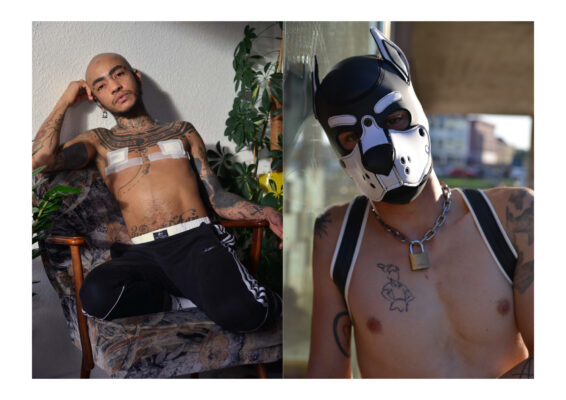
Queer, once understood hostilely as deviation from normative social orders, today embodies self-determined ways of living. In that, queer people creatively shape notions of sexual desire and gender identity, as well as relationships, and much more. In this context, and throughout queer culture and history, friendship is one of the fundamental principles of self-organization.
Friendship creates security, protection, care and togetherness where institutions fail to provide queer people with adequate support structures, or even worse, incite discrimination. Especially in the art sector, queers represent stakeholders with multiple precarious backgrounds exposed to increased economic and health pressures. This is where queer relations and networks can serve as safety nets, strategies of emotional and economic support as well as survival.
This zine is about friendship in a double sense. It is based on a long and deep communion between the editors. In addition, nine artists and collectives discuss the topic in many different ways: often overtly addressing intimacy, like-mindedness, closeness, and often vaguely, along the lines of technology, networks, and dependence.
Intended to be a space for queer artists, queer art and queer themes, Rosé puts the works at its center. It features photography, performance, design, installation, happening, painting, social media art, sculpture and drag. In this sense, Rosé can be seen as an exhibition that can be touched, picked up, taken away and shared. This is Rosé, meant to be in motion.
Friendship creates security, protection, care and togetherness where institutions fail to provide queer people with adequate support structures, or even worse, incite discrimination. Especially in the art sector, queers represent stakeholders with multiple precarious backgrounds exposed to increased economic and health pressures. This is where queer relations and networks can serve as safety nets, strategies of emotional and economic support as well as survival.
This zine is about friendship in a double sense. It is based on a long and deep communion between the editors. In addition, nine artists and collectives discuss the topic in many different ways: often overtly addressing intimacy, like-mindedness, closeness, and often vaguely, along the lines of technology, networks, and dependence.
Intended to be a space for queer artists, queer art and queer themes, Rosé puts the works at its center. It features photography, performance, design, installation, happening, painting, social media art, sculpture and drag. In this sense, Rosé can be seen as an exhibition that can be touched, picked up, taken away and shared. This is Rosé, meant to be in motion.
122 pages (illl.)
EN
| Poids | 330 g |
|---|---|
| Dimensions | 16,5 × 23,5 cm |
Produits similaires


15,00 €
Don José Carmen, parle à ses plantes et celles-ci lui donnent des légumes de tailles hors-normes


Fanzine
3,00 €
"Ce qui apparut sur les murs quand les yeux se sont ouverts."
