

-
×
 Shanghai Cosmetic - Leslie Moquin
1 × 19,00 €
Shanghai Cosmetic - Leslie Moquin
1 × 19,00 € -
×
 WREK The Algorithm! - Aarnoud Rommens, Olivier Deprez - FR
2 × 12,00 €
WREK The Algorithm! - Aarnoud Rommens, Olivier Deprez - FR
2 × 12,00 € -
×
 (page 1 et 17) - Lorraine Druon
1 × 3,00 €
(page 1 et 17) - Lorraine Druon
1 × 3,00 € -
×
 Oblikvaj 2 - L'amour à la maison - Yannis La Macchia, Ensemble Battida
1 × 10,00 €
Oblikvaj 2 - L'amour à la maison - Yannis La Macchia, Ensemble Battida
1 × 10,00 € -
×
 Jérôme LeGlatin (avec Mel Crawford) - Le Crash
1 × 5,00 €
Jérôme LeGlatin (avec Mel Crawford) - Le Crash
1 × 5,00 € -
×
 Gros Gris n°4 - Duel
2 × 12,80 €
Gros Gris n°4 - Duel
2 × 12,80 € -
×
 Dans la Lune - Fanette Mellier
1 × 25,00 €
Dans la Lune - Fanette Mellier
1 × 25,00 € -
×
 La typographie des Penguin Classics - Andrew Barker
1 × 16,00 €
La typographie des Penguin Classics - Andrew Barker
1 × 16,00 € -
×
 Dédale - Laurent Chardon
1 × 28,00 €
Dédale - Laurent Chardon
1 × 28,00 € -
×
 RISO Le Cygne de Popper - Philonimo 7 - Janik Coat
1 × 25,00 €
RISO Le Cygne de Popper - Philonimo 7 - Janik Coat
1 × 25,00 € -
×
 il y avait une ville - Laeticia L'Heureux
1 × 20,00 €
il y avait une ville - Laeticia L'Heureux
1 × 20,00 € -
×
 Le lacéré anonyme - Jacques Villeglé
1 × 10,00 €
Le lacéré anonyme - Jacques Villeglé
1 × 10,00 € -
×
 Idoine & Supermarket
1 × 5,00 €
Idoine & Supermarket
1 × 5,00 € -
×
 interférence - 2 - maycec
1 × 12,00 €
interférence - 2 - maycec
1 × 12,00 € -
×
 Tchat - Gary Colin
1 × 12,00 €
Tchat - Gary Colin
1 × 12,00 € -
×
 Good Company - Paul Van der Eerden
1 × 15,00 €
Good Company - Paul Van der Eerden
1 × 15,00 € -
×
 Mökki n°2
1 × 10,00 €
Mökki n°2
1 × 10,00 € -
×
 La prise - Florian Javet
1 × 24,00 €
La prise - Florian Javet
1 × 24,00 € -
×
 Design sous artifice : la création au risque du machine learning - Anthony Masure
1 × 10,00 €
Design sous artifice : la création au risque du machine learning - Anthony Masure
1 × 10,00 € -
×
 Before Science - Gilles Pourtier, Anne-Claire Broc'h
1 × 17,00 €
Before Science - Gilles Pourtier, Anne-Claire Broc'h
1 × 17,00 € -
×
 La traversée - Magali Brueder
1 × 20,00 €
La traversée - Magali Brueder
1 × 20,00 € -
×
 Comment quitter la terre ? - Jill Gasparina, Christophe Kihm, Anne-Lyse Renon
1 × 10,00 €
Comment quitter la terre ? - Jill Gasparina, Christophe Kihm, Anne-Lyse Renon
1 × 10,00 € -
×
 Seoul Flowers & Trees - tribute to Lee Friedlander
1 × 25,00 €
Seoul Flowers & Trees - tribute to Lee Friedlander
1 × 25,00 € -
×
 Saint Julien l'hospitalier Tome 3 - Claire Pedot
1 × 25,00 €
Saint Julien l'hospitalier Tome 3 - Claire Pedot
1 × 25,00 € -
×
 moj’am al arabeia - Farah Khelil & antoine lefebvre editions
1 × 20,00 €
moj’am al arabeia - Farah Khelil & antoine lefebvre editions
1 × 20,00 € -
×
 Le chateau enchanté - Atelier Mclane
1 × 20,00 €
Le chateau enchanté - Atelier Mclane
1 × 20,00 € -
×
 Imagos - Noémie Lothe
2 × 20,00 €
Imagos - Noémie Lothe
2 × 20,00 € -
×
 ADBC du Dessin - Jacques Floret
1 × 10,00 €
ADBC du Dessin - Jacques Floret
1 × 10,00 € -
×
 Gruppen n°14 - Collectif
1 × 15,00 €
Gruppen n°14 - Collectif
1 × 15,00 € -
×
 OKATAOKA MEETS FOLK ART SERIES “HELLO MEXICO”
1 × 9,00 €
OKATAOKA MEETS FOLK ART SERIES “HELLO MEXICO”
1 × 9,00 € -
×
 Acteurs d'un film gravé. Docteur A. Infirmier O. - Annabelle Dupret, Olivier Deprez et Adolpho Avril
1 × 9,00 €
Acteurs d'un film gravé. Docteur A. Infirmier O. - Annabelle Dupret, Olivier Deprez et Adolpho Avril
1 × 9,00 € -
×
 Le dos des choses - Guillaume Goutal
1 × 13,00 €
Le dos des choses - Guillaume Goutal
1 × 13,00 € -
×
 the Ghost of Weaving - Coll.
1 × 13,60 €
the Ghost of Weaving - Coll.
1 × 13,60 € -
×
 Brush Master - Jasper "Mississippi" Travis
1 × 15,00 €
Brush Master - Jasper "Mississippi" Travis
1 × 15,00 € -
×
 Papier magazine n°06 - Coupe du monde
1 × 20,00 €
Papier magazine n°06 - Coupe du monde
1 × 20,00 € -
×
 Autodrône - Divine Vizion
1 × 28,00 €
Autodrône - Divine Vizion
1 × 28,00 € -
×
 Poétique d'une introspection visuelle - Jean-Charles Andrieu de Levis, Alex Barbier
1 × 12,00 €
Poétique d'une introspection visuelle - Jean-Charles Andrieu de Levis, Alex Barbier
1 × 12,00 € -
×
 Le blanc nez - Fouss Daniel
1 × 20,00 €
Le blanc nez - Fouss Daniel
1 × 20,00 € -
×
 People in a faraday cage - Stéphanie Gygax
1 × 22,00 €
People in a faraday cage - Stéphanie Gygax
1 × 22,00 € -
×
 Titanic Orchestra - Julien Mauve
1 × 25,00 €
Titanic Orchestra - Julien Mauve
1 × 25,00 € -
×
 Hérésie Étiologique - coll.
1 × 28,00 €
Hérésie Étiologique - coll.
1 × 28,00 € -
×
 À partir de n°1 - Coll.
1 × 15,00 €
À partir de n°1 - Coll.
1 × 15,00 € -
×
 Darkest Night - Joel Van Audenhaege
1 × 35,00 €
Darkest Night - Joel Van Audenhaege
1 × 35,00 €


La grande surface de réparation – Gilles Pourtier


20,00 €
Un an au 3 bis f, un centre d’art contemporain situé au cœur de l’hôpital psychiatrique Montperrin à Aix-en-Provence.
En stock
Textes de Jean-Christophe Arcos, Philippe Prost
Design : Bureau Wolewinski
Couverture souple
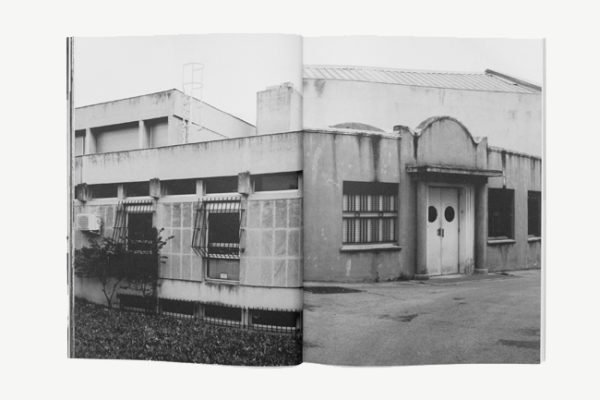
Gilles Pourtier a été accueilli pendant un an au 3 bis f, un centre d’art contemporain situé au cœur de l’hôpital psychiatrique Montperrin à Aix-en-Provence. La grande surface de réparation s’intéresse à ce lieu de soin et à son architecture sérielle, examinant les variations typologiques des pavillons où sont accueillis les patients.
Les photographies insistent sur le caractère répétitif et la production de masse de ces édifices, rapprochant cette esthétique industrielle des problématiques de l’art minimal. Gilles Pourtier développe également une série de dessins titrés Wunderblocks qui interroge la relation entre le bâti et les individus. La pluridisciplinarité, défendue dans cet ouvrage croisant dessins, photographies, architecture, permet d’apporter un regard nouveau sur le sujet de la psychiatrie en s’intéressant au rapport étroit entre des pathologies et des environnements. Les textes de Jean-Christophe Arcos (commissaire d’exposition) et de Philippe Prost (architecte) appuient et éclairent cette démarche tout au long de l’ouvrage.
Gilles Pourtier took part in a one-year artist’s residency at 3 bis f, a contemporary art centre located in the Montperrin psychiatric hospital in Aix-en-Provence. La grande surface de réparation (The Great Observation Box) focuses on this mental health institute and its serial architecture, examining the typological variations of the pavilions where the patients are admitted.
The photographs underline the repetitive nature and the mass production of these buildings, establishing a parallel between this industrial aesthetic and the issues of minimal art. Gilles Pourtier also developed a series of drawings entitled Wunderblocks that questions the relation between built environments and individuals. The multidisciplinary approach in this publication mixes drawings, photographs and architecture. It brings a new perspective on the subject of psychiatry by observing the close relationship between pathologies and environments. Throughout the book, the texts by Jean-Christophe Arcos (exhibition curator) and Philippe Prost (architect) complement and shed light on this process.
| Poids | 340 g |
|---|---|
| Dimensions | 19 × 26 cm |
Vous aimerez peut-être aussi…
17,00 €
Dans la vallée de l’Agly, Gilles Pourtier et Anne-Claire Broc’h ont observé la géologie du terrain, au plus près du cours du fleuve.

Livre Photo
20,00 €
SKKS est une partie du code que l’on retrouve sur les plaques d’immatriculation en Slovaquie.
Produits similaires

Livre Photo
32,00 €
Des silhouettes solitaires en attente d’un départ.
Livre Photo
20,00 €
Une traversée entre Marseille et la Corse entre mer et terre

Livre Photo
29,00 €
L'idée de produire dans le temps de cette transhumance un musée de substitution à partir des seules perspectives de la photographie.

25,00 €
La démarche photographique de Nicolas Savary et Tilo Steireif porte sur la représentation du politicien en tant que figure dans le système politique « de milice », en Suisse.

Livre Photo
35,00 €
Choisir de regarder Michel Journiac en travesti
Collage
20,00 €
Apparaissent des restes épars et altérés de photographies, cartes, paysages, empreintes, visages, corps et fossiles.

Livre Photo
12,00 €
Derrière la couverture d’In The Navy de Julien Kedryna – beau leurre minimaliste – se cache une suite d’images-nuggets grasses et gaies.

Dits & Écrits d'artistes
25,00 €
Aboukaïev est d’abord atteint de mélancolie comme certains oiseaux enivrés et dont le coeur ne veut plus s’arrêter de voler, de capituler face à l’horizon.