

-
×
 Critique d'art n°55
1 × 16,00 €
Critique d'art n°55
1 × 16,00 € -
×
 Rasclose - Geoffroy Mathieu
2 × 17,00 €
Rasclose - Geoffroy Mathieu
2 × 17,00 € -
×
 š! #39 'The End' - coll.
1 × 10,00 €
š! #39 'The End' - coll.
1 × 10,00 € -
×
 Fluent - Laëticia Donval
1 × 17,00 €
Fluent - Laëticia Donval
1 × 17,00 € -
×
 Philonimo - Le Chien de Diogène - Alice Brière-Haquet, Kazuko Matt
1 × 9,00 €
Philonimo - Le Chien de Diogène - Alice Brière-Haquet, Kazuko Matt
1 × 9,00 € -
×
 Comment quitter la terre ? - Jill Gasparina, Christophe Kihm, Anne-Lyse Renon
1 × 10,00 €
Comment quitter la terre ? - Jill Gasparina, Christophe Kihm, Anne-Lyse Renon
1 × 10,00 € -
×
 Recto Versu - Bill Noir
1 × 15,00 €
Recto Versu - Bill Noir
1 × 15,00 € -
×
 Dédale - Laurent Chardon
1 × 28,00 €
Dédale - Laurent Chardon
1 × 28,00 € -
×
 Editer l’art – Leszek Brogowski
1 × 33,00 €
Editer l’art – Leszek Brogowski
1 × 33,00 € -
×
 Jean-Jacques a dit - Angèle Douche
1 × 5,00 €
Jean-Jacques a dit - Angèle Douche
1 × 5,00 € -
×
 Avec ce qu'il resterait à dire - Anne Maurel
1 × 13,00 €
Avec ce qu'il resterait à dire - Anne Maurel
1 × 13,00 € -
×
 Titanic Orchestra - Julien Mauve
1 × 25,00 €
Titanic Orchestra - Julien Mauve
1 × 25,00 € -
×
 Cf. - Pierre Olivier Arnaud
1 × 18,00 €
Cf. - Pierre Olivier Arnaud
1 × 18,00 € -
×
 Flower finds - Orianne Jeanselme
1 × 19,00 €
Flower finds - Orianne Jeanselme
1 × 19,00 € -
×
 The life of Ruben - Bernardo Sousa Santos
1 × 33,00 €
The life of Ruben - Bernardo Sousa Santos
1 × 33,00 € -
×
 ADBC du Dessin - Jacques Floret
1 × 10,00 €
ADBC du Dessin - Jacques Floret
1 × 10,00 € -
×
 Le corps travesti - Michel Journiac
1 × 35,00 €
Le corps travesti - Michel Journiac
1 × 35,00 € -
×
 Bambi # 4 - Collectif
1 × 12,00 €
Bambi # 4 - Collectif
1 × 12,00 € -
×
 Zombie Girls 2.0 - Lucie Lučanská
1 × 18,00 €
Zombie Girls 2.0 - Lucie Lučanská
1 × 18,00 € -
×
 On dirait le sud - Anne-Sophie Turion
1 × 15,00 €
On dirait le sud - Anne-Sophie Turion
1 × 15,00 € -
×
 Bacon le Cannibale - Perrine Le Querrec
1 × 15,00 €
Bacon le Cannibale - Perrine Le Querrec
1 × 15,00 € -
×
 Saint Julien l'hospitalier Tome 2 - Claire Pedot
1 × 25,00 €
Saint Julien l'hospitalier Tome 2 - Claire Pedot
1 × 25,00 € -
×
 Good Company - Paul Van der Eerden
1 × 15,00 €
Good Company - Paul Van der Eerden
1 × 15,00 € -
×
 Eros negro #2 - Demoniak
1 × 5,00 €
Eros negro #2 - Demoniak
1 × 5,00 € -
×
 ARTZINES #1, Paris issue
1 × 10,00 €
ARTZINES #1, Paris issue
1 × 10,00 € -
×
 Regards croisés — Gekreutze Blicke - Yeloyolo
1 × 35,00 €
Regards croisés — Gekreutze Blicke - Yeloyolo
1 × 35,00 € -
×
 Délié - Baptiste Oberson
1 × 24,00 €
Délié - Baptiste Oberson
1 × 24,00 € -
×
 Seoul Flowers & Trees - tribute to Lee Friedlander
1 × 25,00 €
Seoul Flowers & Trees - tribute to Lee Friedlander
1 × 25,00 € -
×
 Strange Design - Ed. Jehanne Dautrey et Emanuele Quinz.
1 × 24,00 €
Strange Design - Ed. Jehanne Dautrey et Emanuele Quinz.
1 × 24,00 € -
×
 America - Ayline Olukman, Hélène Gaudy
1 × 16,00 €
America - Ayline Olukman, Hélène Gaudy
1 × 16,00 € -
×
 Papier magazine n°06 - Coupe du monde
1 × 20,00 €
Papier magazine n°06 - Coupe du monde
1 × 20,00 € -
×
 We want to look up at the Sun, but could the Sun be looking down on us? - Rudy Guedj & Olivier Goethals
1 × 20,00 €
We want to look up at the Sun, but could the Sun be looking down on us? - Rudy Guedj & Olivier Goethals
1 × 20,00 € -
×
 Der Erste Rotkehlchen - Le livre
1 × 17,00 €
Der Erste Rotkehlchen - Le livre
1 × 17,00 € -
×
 SKKS - Gilles Pourtier
1 × 20,00 €
SKKS - Gilles Pourtier
1 × 20,00 € -
×
 Shanghai Cosmetic - Leslie Moquin
1 × 19,00 €
Shanghai Cosmetic - Leslie Moquin
1 × 19,00 € -
×
 Dark optics - David Claerbout
1 × 18,00 €
Dark optics - David Claerbout
1 × 18,00 € -
×
 RÉVÉSZ LÁSZLÓ LÁSZLÓ , Not Secret
1 × 12,50 €
RÉVÉSZ LÁSZLÓ LÁSZLÓ , Not Secret
1 × 12,50 € -
×
 Feminist Art Activisms and Artivisms - Katy Deepwell (ed.)
1 × 29,00 €
Feminist Art Activisms and Artivisms - Katy Deepwell (ed.)
1 × 29,00 € -
×
 Le blanc nez - Fouss Daniel
1 × 20,00 €
Le blanc nez - Fouss Daniel
1 × 20,00 € -
×
 Savoir Revivre - Jacques Massacrier
1 × 29,90 €
Savoir Revivre - Jacques Massacrier
1 × 29,90 €


La grande surface de réparation – Gilles Pourtier


20,00 €
Un an au 3 bis f, un centre d’art contemporain situé au cœur de l’hôpital psychiatrique Montperrin à Aix-en-Provence.
En stock
Textes de Jean-Christophe Arcos, Philippe Prost
Design : Bureau Wolewinski
Couverture souple
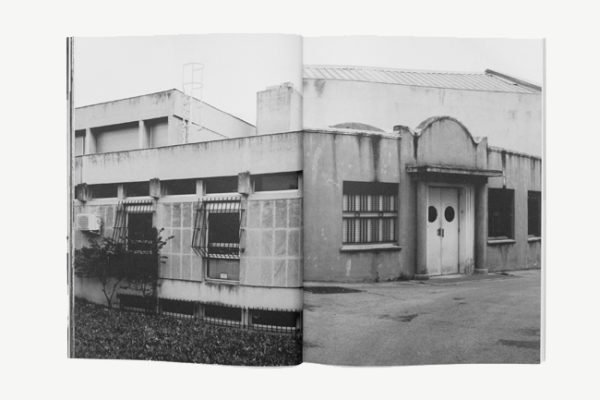
Gilles Pourtier a été accueilli pendant un an au 3 bis f, un centre d’art contemporain situé au cœur de l’hôpital psychiatrique Montperrin à Aix-en-Provence. La grande surface de réparation s’intéresse à ce lieu de soin et à son architecture sérielle, examinant les variations typologiques des pavillons où sont accueillis les patients.
Les photographies insistent sur le caractère répétitif et la production de masse de ces édifices, rapprochant cette esthétique industrielle des problématiques de l’art minimal. Gilles Pourtier développe également une série de dessins titrés Wunderblocks qui interroge la relation entre le bâti et les individus. La pluridisciplinarité, défendue dans cet ouvrage croisant dessins, photographies, architecture, permet d’apporter un regard nouveau sur le sujet de la psychiatrie en s’intéressant au rapport étroit entre des pathologies et des environnements. Les textes de Jean-Christophe Arcos (commissaire d’exposition) et de Philippe Prost (architecte) appuient et éclairent cette démarche tout au long de l’ouvrage.
Gilles Pourtier took part in a one-year artist’s residency at 3 bis f, a contemporary art centre located in the Montperrin psychiatric hospital in Aix-en-Provence. La grande surface de réparation (The Great Observation Box) focuses on this mental health institute and its serial architecture, examining the typological variations of the pavilions where the patients are admitted.
The photographs underline the repetitive nature and the mass production of these buildings, establishing a parallel between this industrial aesthetic and the issues of minimal art. Gilles Pourtier also developed a series of drawings entitled Wunderblocks that questions the relation between built environments and individuals. The multidisciplinary approach in this publication mixes drawings, photographs and architecture. It brings a new perspective on the subject of psychiatry by observing the close relationship between pathologies and environments. Throughout the book, the texts by Jean-Christophe Arcos (exhibition curator) and Philippe Prost (architect) complement and shed light on this process.
| Poids | 340 g |
|---|---|
| Dimensions | 19 × 26 cm |
Vous aimerez peut-être aussi…

17,00 €
Dans la vallée de l’Agly, Gilles Pourtier et Anne-Claire Broc’h ont observé la géologie du terrain, au plus près du cours du fleuve.
Livre Photo
20,00 €
SKKS est une partie du code que l’on retrouve sur les plaques d’immatriculation en Slovaquie.
Produits similaires

Livre paysage
25,00 €
Les Climats II (Japon), premier livre de Lola Reboud, a pour fil conducteur la relation que nous entretenons aux Climats.

Dits & Écrits d'artistes
25,00 €
Aboukaïev est d’abord atteint de mélancolie comme certains oiseaux enivrés et dont le coeur ne veut plus s’arrêter de voler, de capituler face à l’horizon.

Livre Photo
15,00 €
akaBB – tribute to Roni Horn is not a photographic diary, and neither is it a simple hommage to Roni Horn’s book.

Livre Photo
25,00 €
Ces images ne sont ni fenêtres, ni miroirs.
Livre Photo
35,00 €
Choisir de regarder Michel Journiac en travesti
Livre Photo
17,00 €
Raclose de Geoffroy Mathieu est la première des trois résidences initiées par Lumière d’Encre ↗ autour des fleuves côtiers des Pyrénées-Orientales

Livre Photo
12,00 €
Derrière la couverture d’In The Navy de Julien Kedryna – beau leurre minimaliste – se cache une suite d’images-nuggets grasses et gaies.
-20%

Livre art contemporain
Le prix initial était : 16,00 €.12,80 €Le prix actuel est : 12,80 €.
Combats polymorphes, divertissants, déraisonnables ou nécessaires