

-
×
 The Shelf - Journal 3
1 × 20,00 €
The Shelf - Journal 3
1 × 20,00 € -
×
 Eros Negro # 1 - Demoniak
1 × 5,00 €
Eros Negro # 1 - Demoniak
1 × 5,00 € -
×
 De lave et de fer - Laurent Feynerou
1 × 22,00 €
De lave et de fer - Laurent Feynerou
1 × 22,00 € -
×
 Le corps travesti - Michel Journiac
1 × 35,00 €
Le corps travesti - Michel Journiac
1 × 35,00 € -
×
 La construction - Perrine Le Querrec
1 × 42,00 €
La construction - Perrine Le Querrec
1 × 42,00 € -
×
 Alma Mater n°1
1 × 12,00 €
Alma Mater n°1
1 × 12,00 € -
×
 Mökki n°4
1 × 10,00 €
Mökki n°4
1 × 10,00 € -
×
 An Inventory Of - Daniele Franzella
1 × 12,00 €
An Inventory Of - Daniele Franzella
1 × 12,00 € -
×
 Paysageur n°3 - Mobiles
1 × 16,00 €
Paysageur n°3 - Mobiles
1 × 16,00 € -
×
 Blaclywall by Sihab Baik - Claude Closky
1 × 25,00 €
Blaclywall by Sihab Baik - Claude Closky
1 × 25,00 € -
×
 Thierry Tillier No Future - OR BOR #5
2 × 10,00 €
Thierry Tillier No Future - OR BOR #5
2 × 10,00 € -
×
 ARTZINES #1, Paris issue
1 × 10,00 €
ARTZINES #1, Paris issue
1 × 10,00 € -
×
 Salt Crystal - Fabio Parizzi
1 × 22,00 €
Salt Crystal - Fabio Parizzi
1 × 22,00 € -
×
 Piano - Joseph Charroy
1 × 12,00 €
Piano - Joseph Charroy
1 × 12,00 € -
×
 Pectus Excavatum - Quentin Yvelin
1 × 8,00 €
Pectus Excavatum - Quentin Yvelin
1 × 8,00 € -
×
 Konrad Becker - Dictionnaire de réalité stratégique
1 × 20,00 €
Konrad Becker - Dictionnaire de réalité stratégique
1 × 20,00 € -
×
 Lazy Painter - Angela Gjergjaj, Jordi Bucher and Mirco Petrini
1 × 22,00 €
Lazy Painter - Angela Gjergjaj, Jordi Bucher and Mirco Petrini
1 × 22,00 € -
×
 Cuadernos - Henry Deletra
1 × 15,00 €
Cuadernos - Henry Deletra
1 × 15,00 € -
×
 Roven n°4
1 × 18,00 €
Roven n°4
1 × 18,00 € -
×
 Rupture (fragments) - Benjamin Monti, Jean-Charles Andrieu de Levis
1 × 20,00 €
Rupture (fragments) - Benjamin Monti, Jean-Charles Andrieu de Levis
1 × 20,00 € -
×
 Bande Annonce - Cinéma & Bande Dessinée - Coll.
1 × 20,00 €
Bande Annonce - Cinéma & Bande Dessinée - Coll.
1 × 20,00 € -
×
 Lavalse des tambours - Paul Rey
1 × 25,00 €
Lavalse des tambours - Paul Rey
1 × 25,00 € -
×
 Le chateau enchanté - Atelier Mclane
1 × 20,00 €
Le chateau enchanté - Atelier Mclane
1 × 20,00 € -
×
 Lili, la rozell et le marimba / revue n°2
1 × 15,00 €
Lili, la rozell et le marimba / revue n°2
1 × 15,00 € -
×
 Temps d'arrêt - Etienne Buyse
1 × 32,00 €
Temps d'arrêt - Etienne Buyse
1 × 32,00 € -
×
 L'atelier partagé avec Géraldine Trubert
1 × 20,00 €
L'atelier partagé avec Géraldine Trubert
1 × 20,00 € -
×
 Prose postérieure - Les commissaires anonymes
1 × 15,00 €
Prose postérieure - Les commissaires anonymes
1 × 15,00 € -
×
 Mökki n°2
1 × 10,00 €
Mökki n°2
1 × 10,00 € -
×
 Yerevan 1996/1997 - Ursula Schulz-Dornburg
1 × 25,00 €
Yerevan 1996/1997 - Ursula Schulz-Dornburg
1 × 25,00 € -
×
 Entretiens – Jérôme Dupeyrat
1 × 25,00 €
Entretiens – Jérôme Dupeyrat
1 × 25,00 € -
×
 Editer l’art – Leszek Brogowski
1 × 33,00 €
Editer l’art – Leszek Brogowski
1 × 33,00 € -
×
 Véhicule N°7 - Collectif
1 × 25,00 €
Véhicule N°7 - Collectif
1 × 25,00 € -
×
 AARC – Alter Architecture Research Collective n° 01
1 × 10,00 €
AARC – Alter Architecture Research Collective n° 01
1 × 10,00 € -
×
 Titanic Orchestra - Julien Mauve
1 × 25,00 €
Titanic Orchestra - Julien Mauve
1 × 25,00 € -
×
 Problèmes de localisation - Élise Legal
1 × 11,00 €
Problèmes de localisation - Élise Legal
1 × 11,00 € -
×
 Denver Mosaic 1961 - René Heyvaert
1 × 29,00 €
Denver Mosaic 1961 - René Heyvaert
1 × 29,00 € -
×
 Revue Brut #2 - OR BOR
1 × 10,00 €
Revue Brut #2 - OR BOR
1 × 10,00 € -
×
 Après la révolution – numéro 1
1 × 30,00 €
Après la révolution – numéro 1
1 × 30,00 € -
×
 Bambi # 4 - Collectif
1 × 12,00 €
Bambi # 4 - Collectif
1 × 12,00 € -
×
 Keywording (Post) Contemporary Art - Greta Rusttt
1 × 20,00 €
Keywording (Post) Contemporary Art - Greta Rusttt
1 × 20,00 € -
×
 La mémoire en acte - Quarente ans de création musicale
1 × 15,00 €
La mémoire en acte - Quarente ans de création musicale
1 × 15,00 € -
×
 Feminist Art Activisms and Artivisms - Katy Deepwell (ed.)
1 × 29,00 €
Feminist Art Activisms and Artivisms - Katy Deepwell (ed.)
1 × 29,00 € -
×
 In The Navy - Julien Kedryna
1 × 12,00 €
In The Navy - Julien Kedryna
1 × 12,00 €


La grande surface de réparation – Gilles Pourtier


20,00 €
Un an au 3 bis f, un centre d’art contemporain situé au cœur de l’hôpital psychiatrique Montperrin à Aix-en-Provence.
En stock
Textes de Jean-Christophe Arcos, Philippe Prost
Design : Bureau Wolewinski
Couverture souple
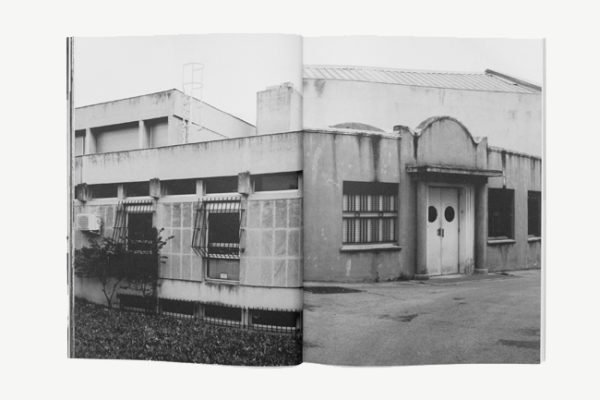
Gilles Pourtier a été accueilli pendant un an au 3 bis f, un centre d’art contemporain situé au cœur de l’hôpital psychiatrique Montperrin à Aix-en-Provence. La grande surface de réparation s’intéresse à ce lieu de soin et à son architecture sérielle, examinant les variations typologiques des pavillons où sont accueillis les patients.
Les photographies insistent sur le caractère répétitif et la production de masse de ces édifices, rapprochant cette esthétique industrielle des problématiques de l’art minimal. Gilles Pourtier développe également une série de dessins titrés Wunderblocks qui interroge la relation entre le bâti et les individus. La pluridisciplinarité, défendue dans cet ouvrage croisant dessins, photographies, architecture, permet d’apporter un regard nouveau sur le sujet de la psychiatrie en s’intéressant au rapport étroit entre des pathologies et des environnements. Les textes de Jean-Christophe Arcos (commissaire d’exposition) et de Philippe Prost (architecte) appuient et éclairent cette démarche tout au long de l’ouvrage.
Gilles Pourtier took part in a one-year artist’s residency at 3 bis f, a contemporary art centre located in the Montperrin psychiatric hospital in Aix-en-Provence. La grande surface de réparation (The Great Observation Box) focuses on this mental health institute and its serial architecture, examining the typological variations of the pavilions where the patients are admitted.
The photographs underline the repetitive nature and the mass production of these buildings, establishing a parallel between this industrial aesthetic and the issues of minimal art. Gilles Pourtier also developed a series of drawings entitled Wunderblocks that questions the relation between built environments and individuals. The multidisciplinary approach in this publication mixes drawings, photographs and architecture. It brings a new perspective on the subject of psychiatry by observing the close relationship between pathologies and environments. Throughout the book, the texts by Jean-Christophe Arcos (exhibition curator) and Philippe Prost (architect) complement and shed light on this process.
| Poids | 340 g |
|---|---|
| Dimensions | 19 × 26 cm |
Vous aimerez peut-être aussi…

Livre Photo
20,00 €
SKKS est une partie du code que l’on retrouve sur les plaques d’immatriculation en Slovaquie.

17,00 €
Dans la vallée de l’Agly, Gilles Pourtier et Anne-Claire Broc’h ont observé la géologie du terrain, au plus près du cours du fleuve.
Produits similaires
-20%

Livre Photo
Le prix initial était : 20,00 €.16,00 €Le prix actuel est : 16,00 €.
Ayline Olukman marche, roule, fait des rencontres

25,00 €
La démarche photographique de Nicolas Savary et Tilo Steireif porte sur la représentation du politicien en tant que figure dans le système politique « de milice », en Suisse.

Collage
20,00 €
Apparaissent des restes épars et altérés de photographies, cartes, paysages, empreintes, visages, corps et fossiles.

Livre paysage
25,00 €
Les Climats II (Japon), premier livre de Lola Reboud, a pour fil conducteur la relation que nous entretenons aux Climats.
-20%

Livre Photo
Le prix initial était : 38,00 €.30,40 €Le prix actuel est : 30,40 €.
Loose amid unique landscapes in a timeless bubble

Livre Photo
25,00 €
Ces images ne sont ni fenêtres, ni miroirs.

Livre Photo
24,00 €
La région de Bugarach est aux sources de multiples récits et légendes populaires.