

-
×
 Blaclywall by Sihab Baik - Claude Closky
1 × 25,00 €
Blaclywall by Sihab Baik - Claude Closky
1 × 25,00 € -
×
 akaBB - tribute to Roni horn
1 × 15,00 €
akaBB - tribute to Roni horn
1 × 15,00 € -
×
 Aurore Colbert - Marie Mons
1 × 38,00 €
Aurore Colbert - Marie Mons
1 × 38,00 € -
×
 America - Ayline Olukman, Hélène Gaudy
1 × 16,00 €
America - Ayline Olukman, Hélène Gaudy
1 × 16,00 € -
×
 Der Erste Rotkehlchen - Le livre
1 × 17,00 €
Der Erste Rotkehlchen - Le livre
1 × 17,00 € -
×
 Le corps travesti - Michel Journiac
1 × 35,00 €
Le corps travesti - Michel Journiac
1 × 35,00 € -
×
 SKKS - Gilles Pourtier
1 × 20,00 €
SKKS - Gilles Pourtier
1 × 20,00 € -
×
 Keywording (Post) Contemporary Art - Greta Rusttt
2 × 20,00 €
Keywording (Post) Contemporary Art - Greta Rusttt
2 × 20,00 € -
×
 Wayfaring - Patrick Messina, André S. Labarthe
2 × 35,00 €
Wayfaring - Patrick Messina, André S. Labarthe
2 × 35,00 € -
×
 Débris N°2 - Théo Garnier Greuez
1 × 15,00 €
Débris N°2 - Théo Garnier Greuez
1 × 15,00 € -
×
 Saint Julien l'hospitalier Tome 1 - Claire Pedot
1 × 25,00 €
Saint Julien l'hospitalier Tome 1 - Claire Pedot
1 × 25,00 € -
×
 ARTZINES #1, Paris issue
1 × 10,00 €
ARTZINES #1, Paris issue
1 × 10,00 € -
×
 Seoul Flowers & Trees - tribute to Lee Friedlander
1 × 25,00 €
Seoul Flowers & Trees - tribute to Lee Friedlander
1 × 25,00 € -
×
 Escape - Makiko Minowa
1 × 20,00 €
Escape - Makiko Minowa
1 × 20,00 € -
×
 moj’am al arabeia - Farah Khelil & antoine lefebvre editions
1 × 20,00 €
moj’am al arabeia - Farah Khelil & antoine lefebvre editions
1 × 20,00 € -
×
 (page 1 et 17) - Lorraine Druon
1 × 3,00 €
(page 1 et 17) - Lorraine Druon
1 × 3,00 € -
×
 Holyhood, vol. 1 — Guadalupe, California - Alessandro Mercuri
1 × 12,00 €
Holyhood, vol. 1 — Guadalupe, California - Alessandro Mercuri
1 × 12,00 € -
×
 Rupture (fragments) - Benjamin Monti, Jean-Charles Andrieu de Levis
2 × 20,00 €
Rupture (fragments) - Benjamin Monti, Jean-Charles Andrieu de Levis
2 × 20,00 € -
×
 Ventoline 5 - Coll.
1 × 7,00 €
Ventoline 5 - Coll.
1 × 7,00 € -
×
 Tchat - Gary Colin
1 × 12,00 €
Tchat - Gary Colin
1 × 12,00 € -
×
 Le chateau enchanté - Atelier Mclane
1 × 20,00 €
Le chateau enchanté - Atelier Mclane
1 × 20,00 € -
×
 Après la révolution – numéro 1
1 × 30,00 €
Après la révolution – numéro 1
1 × 30,00 € -
×
 Lazy Painter - Angela Gjergjaj, Jordi Bucher and Mirco Petrini
1 × 22,00 €
Lazy Painter - Angela Gjergjaj, Jordi Bucher and Mirco Petrini
1 × 22,00 € -
×
 MENU メニュー - Wataru Tominaga
1 × 20,00 €
MENU メニュー - Wataru Tominaga
1 × 20,00 € -
×
 16 x 421 - Lorraine Druon
1 × 3,00 €
16 x 421 - Lorraine Druon
1 × 3,00 € -
×
 Le Choix du peuple - Nicolas Savary, Tilo Steireif
1 × 25,00 €
Le Choix du peuple - Nicolas Savary, Tilo Steireif
1 × 25,00 € -
×
 Manifeste d'intérieurs ; penser dans les médias élargis - Javier Fernández Contreras
1 × 10,00 €
Manifeste d'intérieurs ; penser dans les médias élargis - Javier Fernández Contreras
1 × 10,00 € -
×
 Comment quitter la terre ? - Jill Gasparina, Christophe Kihm, Anne-Lyse Renon
1 × 10,00 €
Comment quitter la terre ? - Jill Gasparina, Christophe Kihm, Anne-Lyse Renon
1 × 10,00 € -
×
 Tomber dans l'escalier - Jasper Sebastian Stürup
1 × 12,00 €
Tomber dans l'escalier - Jasper Sebastian Stürup
1 × 12,00 € -
×
 Burning Images, A History of Effigy Protests - Florian Göttke
1 × 26,50 €
Burning Images, A History of Effigy Protests - Florian Göttke
1 × 26,50 € -
×
 Bacon le Cannibale - Perrine Le Querrec
1 × 15,00 €
Bacon le Cannibale - Perrine Le Querrec
1 × 15,00 € -
×
 Dear Paul - Paul Van der Eerden
1 × 20,00 €
Dear Paul - Paul Van der Eerden
1 × 20,00 € -
×
 Inframince et hyperlié - Philippe Lipcare
1 × 12,00 €
Inframince et hyperlié - Philippe Lipcare
1 × 12,00 € -
×
 Philonimo - Le Lézard de Heidegger - Alice Brière-Haquet, Sophie Vissière
1 × 9,00 €
Philonimo - Le Lézard de Heidegger - Alice Brière-Haquet, Sophie Vissière
1 × 9,00 € -
×
 Talweg 6 - La distance
1 × 25,00 €
Talweg 6 - La distance
1 × 25,00 € -
×
 Feminist Art Activisms and Artivisms - Katy Deepwell (ed.)
1 × 29,00 €
Feminist Art Activisms and Artivisms - Katy Deepwell (ed.)
1 × 29,00 € -
×
 Editer l’art – Leszek Brogowski
1 × 33,00 €
Editer l’art – Leszek Brogowski
1 × 33,00 € -
×
 Flynn zine # 1 - Flynn Maria Bergmann
1 × 20,00 €
Flynn zine # 1 - Flynn Maria Bergmann
1 × 20,00 € -
×
 Je ne peux pas ne pas - Geneviève Romang
1 × 24,00 €
Je ne peux pas ne pas - Geneviève Romang
1 × 24,00 € -
×
 In The Navy - Julien Kedryna
1 × 12,00 €
In The Navy - Julien Kedryna
1 × 12,00 € -
×
 interférence - 3 - maycec
1 × 12,00 €
interférence - 3 - maycec
1 × 12,00 € -
×
 People in a faraday cage - Stéphanie Gygax
1 × 22,00 €
People in a faraday cage - Stéphanie Gygax
1 × 22,00 € -
×
 Délié - Baptiste Oberson
1 × 24,00 €
Délié - Baptiste Oberson
1 × 24,00 € -
×
 Bambi # 4 - Collectif
1 × 12,00 €
Bambi # 4 - Collectif
1 × 12,00 € -
×
 Piano - Joseph Charroy
1 × 12,00 €
Piano - Joseph Charroy
1 × 12,00 €


Flower Smuggler – Diana Tamane


30,00 €
« close to a narration on something as large as the European transformations that took place during the last 30 years. »
Plus que 1 en stock
If we look briefly at what makes good art, it is of course to work with what is in front of us.
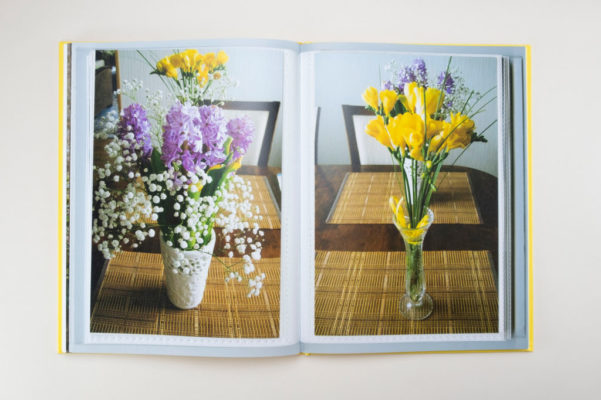
Inventions are good, but if the point of escape into the unknown is the known, even better. Certainly nothing is more readily available than one’s own family. It is a matrix we will never leave, and if we escape it, we inevitably escape in relation to it. Diana worked with the image material her family generated on many formal and technical layers, visually formulating such larger questions as: who sees whom in which way, and smaller questions, such as: What is one doing when the camera is turned off? To what extent is a skin really our last boundary, and what happens when one dies? Diana exploits every possible representation of (her) family, and transforms it with a sharp eye into an art that is entirely its own. She uses the whole repertoire of the contemporary photo-filmic infrastructure, from the mobile phone to the memory stick of her father’s product palette from the last 10 years, to the dashcam of her truck-driving mother, to email, also in order to fulfill yet subvert every possible cliché about the East one could imagine. We should not forget the proper art historical knowledge sleeping behind her approach, which she luckily applies in a very liberating, un-academic and free manner. You wouldn’t need a reference with the simple function of affirming the position of her work, as it is with a lot of art these days. In the end, Diana uses something as personal as family to say something public, close to a narration on something as large as the European transformations that took place during the last 30 years. (Martin Germann)
| Poids | 350 g |
|---|---|
| Dimensions | 22,5 × 30 cm |
Vous aimerez peut-être aussi…

Produits similaires

Livre Photo
32,00 €
Des silhouettes solitaires en attente d’un départ.

17,00 €
Dans la vallée de l’Agly, Gilles Pourtier et Anne-Claire Broc’h ont observé la géologie du terrain, au plus près du cours du fleuve.
Livre Photo
15,00 €
akaBB – tribute to Roni Horn is not a photographic diary, and neither is it a simple hommage to Roni Horn’s book.
Livre Photo
20,00 €
SKKS est une partie du code que l’on retrouve sur les plaques d’immatriculation en Slovaquie.
25,00 €
"It was april and cherry blossom time was just over"
Livre Photo
12,00 €
Derrière la couverture d’In The Navy de Julien Kedryna – beau leurre minimaliste – se cache une suite d’images-nuggets grasses et gaies.

Livre Photo
20,00 €
Une traversée entre Marseille et la Corse entre mer et terre