

-
×
 Pectus Excavatum - Quentin Yvelin
1 × 8,00 €
Pectus Excavatum - Quentin Yvelin
1 × 8,00 € -
×
 À peu près Euclide - Laurent Millet
1 × 16,00 €
À peu près Euclide - Laurent Millet
1 × 16,00 € -
×
 L'atelier partagé avec Géraldine Trubert
1 × 20,00 €
L'atelier partagé avec Géraldine Trubert
1 × 20,00 € -
×
 Ventoline 5 - Coll.
1 × 7,00 €
Ventoline 5 - Coll.
1 × 7,00 € -
×
 Flower finds - Orianne Jeanselme
1 × 19,00 €
Flower finds - Orianne Jeanselme
1 × 19,00 € -
×
 Calendrier des révoltes - Matthieu Saladin
1 × 10,00 €
Calendrier des révoltes - Matthieu Saladin
1 × 10,00 € -
×
 Offrir des fleurs
1 × 25,00 €
Offrir des fleurs
1 × 25,00 € -
×
 Norovirus - Orgie en mers chaudes - Claude Grétillat
1 × 8,00 €
Norovirus - Orgie en mers chaudes - Claude Grétillat
1 × 8,00 € -
×
 Cheat Sheets - Tiger Tateishi
1 × 28,00 €
Cheat Sheets - Tiger Tateishi
1 × 28,00 € -
×
 L'Abeille de Saint-Simon - Alice Brière-Haquet / Mai Li Bernard
1 × 9,00 €
L'Abeille de Saint-Simon - Alice Brière-Haquet / Mai Li Bernard
1 × 9,00 € -
×
 Vacuité 9090 - Jérémy Piningre
1 × 10,00 €
Vacuité 9090 - Jérémy Piningre
1 × 10,00 € -
×
 The Tinklers Charts and Stories - LEBRUN Olivier, LEHNI Urs
1 × 30,00 €
The Tinklers Charts and Stories - LEBRUN Olivier, LEHNI Urs
1 × 30,00 € -
×
 La Vie moderne - Augustin Rebetez
1 × 15,00 €
La Vie moderne - Augustin Rebetez
1 × 15,00 € -
×
 Télégraphes de l'Utopie – L'art des avant-gardes en Europe Centrale 1918-1939 - Sonia de Puineuf
1 × 28,00 €
Télégraphes de l'Utopie – L'art des avant-gardes en Europe Centrale 1918-1939 - Sonia de Puineuf
1 × 28,00 € -
×
 Philatélie - Magali Brueder
1 × 12,00 €
Philatélie - Magali Brueder
1 × 12,00 € -
×
 fil·le·s de polypropylène bleu - coll.
1 × 15,00 €
fil·le·s de polypropylène bleu - coll.
1 × 15,00 € -
×
 Mökki n°2
1 × 10,00 €
Mökki n°2
1 × 10,00 € -
×
 ARTZINES #3 - Tokyo issue
1 × 10,00 €
ARTZINES #3 - Tokyo issue
1 × 10,00 € -
×
 Yerevan 1996/1997 - Ursula Schulz-Dornburg
1 × 25,00 €
Yerevan 1996/1997 - Ursula Schulz-Dornburg
1 × 25,00 € -
×
 Klima Pages #2 — Somptueuses Résidences
1 × 35,00 €
Klima Pages #2 — Somptueuses Résidences
1 × 35,00 € -
×
 Zombie Girls 2.0 - Lucie Lučanská
1 × 18,00 €
Zombie Girls 2.0 - Lucie Lučanská
1 × 18,00 € -
×
 gin ciel - Thomas CHMP
1 × 20,00 €
gin ciel - Thomas CHMP
1 × 20,00 € -
×
 Escape - Makiko Minowa
1 × 20,00 €
Escape - Makiko Minowa
1 × 20,00 € -
×
 Image Canoë - Jérémie Gindre
1 × 8,00 €
Image Canoë - Jérémie Gindre
1 × 8,00 € -
×
 Le Gabion - Théo Robine-Langlois
1 × 16,00 €
Le Gabion - Théo Robine-Langlois
1 × 16,00 € -
×
 Critique d'art n°56
1 × 16,00 €
Critique d'art n°56
1 × 16,00 € -
×
 Rasclose - Geoffroy Mathieu
1 × 17,00 €
Rasclose - Geoffroy Mathieu
1 × 17,00 €


Flower Smuggler – Diana Tamane


30,00 €
« close to a narration on something as large as the European transformations that took place during the last 30 years. »
Plus que 1 en stock
If we look briefly at what makes good art, it is of course to work with what is in front of us.
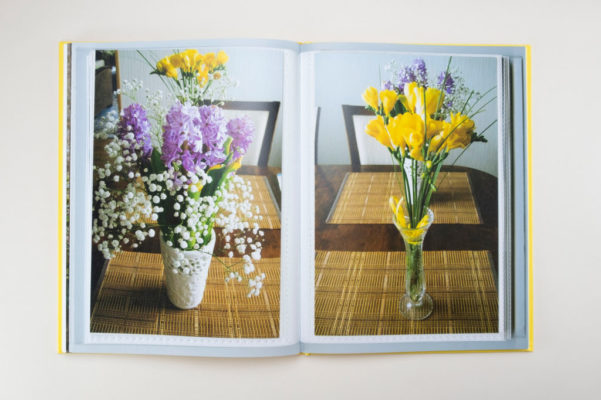
Inventions are good, but if the point of escape into the unknown is the known, even better. Certainly nothing is more readily available than one’s own family. It is a matrix we will never leave, and if we escape it, we inevitably escape in relation to it. Diana worked with the image material her family generated on many formal and technical layers, visually formulating such larger questions as: who sees whom in which way, and smaller questions, such as: What is one doing when the camera is turned off? To what extent is a skin really our last boundary, and what happens when one dies? Diana exploits every possible representation of (her) family, and transforms it with a sharp eye into an art that is entirely its own. She uses the whole repertoire of the contemporary photo-filmic infrastructure, from the mobile phone to the memory stick of her father’s product palette from the last 10 years, to the dashcam of her truck-driving mother, to email, also in order to fulfill yet subvert every possible cliché about the East one could imagine. We should not forget the proper art historical knowledge sleeping behind her approach, which she luckily applies in a very liberating, un-academic and free manner. You wouldn’t need a reference with the simple function of affirming the position of her work, as it is with a lot of art these days. In the end, Diana uses something as personal as family to say something public, close to a narration on something as large as the European transformations that took place during the last 30 years. (Martin Germann)
| Poids | 350 g |
|---|---|
| Dimensions | 22,5 × 30 cm |
Vous aimerez peut-être aussi…

Produits similaires
-20%

Livre Photo
Le prix initial était : 20,00 €.16,00 €Le prix actuel est : 16,00 €.
Ayline Olukman marche, roule, fait des rencontres

Livre d'artiste
38,00 €
Marie Mons a passé trois mois d’hiver dans un petit village des fjords de l’est de Islande où elle est devenue Aurore Colbert

Livre Photo
19,00 €
L'image révèle autant l’artifice que la fascination qu’il exerce.

Livre Photo
35,00 €
Choisir de regarder Michel Journiac en travesti

Livre architecture, design & urbanisme
28,00 €
Le livre de Laurent Chardon Dédale regroupe différentes séries de photographies prises au cours des années 2003 à 2013 et documente un Paris et ses alentours en transformation.

Livre Photo
15,00 €
akaBB – tribute to Roni Horn is not a photographic diary, and neither is it a simple hommage to Roni Horn’s book.

Livre Photo
24,00 €
La région de Bugarach est aux sources de multiples récits et légendes populaires.
-20%

Livre paysage
Le prix initial était : 25,00 €.20,00 €Le prix actuel est : 20,00 €.
La poésie et le beauté des rivages