

-
×
 Critique d'art n°55
1 × 16,00 €
Critique d'art n°55
1 × 16,00 € -
×
 Seoul Flowers & Trees - tribute to Lee Friedlander
1 × 25,00 €
Seoul Flowers & Trees - tribute to Lee Friedlander
1 × 25,00 € -
×
 Le corps travesti - Michel Journiac
1 × 35,00 €
Le corps travesti - Michel Journiac
1 × 35,00 € -
×
 Bande Annonce - Cinéma & Bande Dessinée - Coll.
1 × 20,00 €
Bande Annonce - Cinéma & Bande Dessinée - Coll.
1 × 20,00 € -
×
 Pectus Excavatum - Quentin Yvelin
2 × 8,00 €
Pectus Excavatum - Quentin Yvelin
2 × 8,00 € -
×
 Dialogue de dessins 8 - Marcus Oakley, Roxane Lumeret, Zad Kokar
1 × 15,00 €
Dialogue de dessins 8 - Marcus Oakley, Roxane Lumeret, Zad Kokar
1 × 15,00 € -
×
 Temps d'arrêt - Etienne Buyse
1 × 32,00 €
Temps d'arrêt - Etienne Buyse
1 × 32,00 € -
×
 Good Company - Paul Van der Eerden
1 × 15,00 €
Good Company - Paul Van der Eerden
1 × 15,00 € -
×
 Aurore Colbert - Marie Mons
1 × 38,00 €
Aurore Colbert - Marie Mons
1 × 38,00 € -
×
 Les Climats II (Japon) - Lola Reboud, Mariko Takeuchi
1 × 25,00 €
Les Climats II (Japon) - Lola Reboud, Mariko Takeuchi
1 × 25,00 € -
×
 Un essai sur la typographie - Eric Gill
1 × 17,00 €
Un essai sur la typographie - Eric Gill
1 × 17,00 € -
×
 Dédale - Laurent Chardon
1 × 28,00 €
Dédale - Laurent Chardon
1 × 28,00 € -
×
 Gros Gris n°4 - Duel
2 × 12,80 €
Gros Gris n°4 - Duel
2 × 12,80 € -
×
 UP8 — Pour une pédagogie de l'architecture
1 × 20,00 €
UP8 — Pour une pédagogie de l'architecture
1 × 20,00 € -
×
 fil·le·s de polypropylène bleu - coll.
1 × 15,00 €
fil·le·s de polypropylène bleu - coll.
1 × 15,00 € -
×
 Turbo Decompress - Coll.
2 × 18,00 €
Turbo Decompress - Coll.
2 × 18,00 € -
×
 Photographic Fields - Joël Van Audenhaege
1 × 25,00 €
Photographic Fields - Joël Van Audenhaege
1 × 25,00 € -
×
 Avec ce qu'il resterait à dire - Anne Maurel
1 × 13,00 €
Avec ce qu'il resterait à dire - Anne Maurel
1 × 13,00 € -
×
 Deep state - Mathieu Desjardins
1 × 20,00 €
Deep state - Mathieu Desjardins
1 × 20,00 € -
×
 Saint Julien l'hospitalier Tome 3 - Claire Pedot
1 × 25,00 €
Saint Julien l'hospitalier Tome 3 - Claire Pedot
1 × 25,00 € -
×
 La traversée - Magali Brueder
1 × 20,00 €
La traversée - Magali Brueder
1 × 20,00 € -
×
 Le blanc nez - Fouss Daniel
1 × 20,00 €
Le blanc nez - Fouss Daniel
1 × 20,00 € -
×
 L'inventaire des destructions - Éric Watier
1 × 12,00 €
L'inventaire des destructions - Éric Watier
1 × 12,00 € -
×
 Soundtrack/s - Rosaire Appel
1 × 8,00 €
Soundtrack/s - Rosaire Appel
1 × 8,00 € -
×
 Cruiser l'utopie – L'après et ailleurs de l'advenir queer - José Esteban Muñoz
1 × 22,00 €
Cruiser l'utopie – L'après et ailleurs de l'advenir queer - José Esteban Muñoz
1 × 22,00 € -
×
 Farandole - Jérémie Fischer
1 × 15,00 €
Farandole - Jérémie Fischer
1 × 15,00 € -
×
 Prose postérieure - Les commissaires anonymes
1 × 15,00 €
Prose postérieure - Les commissaires anonymes
1 × 15,00 € -
×
 Der Erste Rotkehlchen - Le livre
1 × 17,00 €
Der Erste Rotkehlchen - Le livre
1 × 17,00 € -
×
 Il était deux fois - Gary Colin
1 × 7,00 €
Il était deux fois - Gary Colin
1 × 7,00 € -
×
 Sillo n°3 - Le Fauve
1 × 12,00 €
Sillo n°3 - Le Fauve
1 × 12,00 € -
×
 America - Ayline Olukman, Hélène Gaudy
1 × 16,00 €
America - Ayline Olukman, Hélène Gaudy
1 × 16,00 € -
×
 La prise - Florian Javet
1 × 24,00 €
La prise - Florian Javet
1 × 24,00 € -
×
 Science of the secondary #11 - Banana
1 × 19,00 €
Science of the secondary #11 - Banana
1 × 19,00 € -
×
 Papier magazine n°06 - Coupe du monde
1 × 20,00 €
Papier magazine n°06 - Coupe du monde
1 × 20,00 € -
×
 Roven n°4
1 × 18,00 €
Roven n°4
1 × 18,00 € -
×
 Mariken Wessels — Miss Cox
1 × 28,00 €
Mariken Wessels — Miss Cox
1 × 28,00 € -
×
 Le chateau enchanté - Atelier Mclane
1 × 20,00 €
Le chateau enchanté - Atelier Mclane
1 × 20,00 € -
×
 Manuel d'écologie urbaine - Audrey Muratet, François Chiron
1 × 15,00 €
Manuel d'écologie urbaine - Audrey Muratet, François Chiron
1 × 15,00 € -
×
 Le singe et le bijoux - Roxane Lumeret
1 × 15,00 €
Le singe et le bijoux - Roxane Lumeret
1 × 15,00 € -
×
 La France de tête #04
1 × 3,00 €
La France de tête #04
1 × 3,00 € -
×
 Alma Mater n°1
1 × 12,00 €
Alma Mater n°1
1 × 12,00 € -
×
 L'abécédaire d'un typographe - Gerrit Noordzij; Jost Hochuli
1 × 22,00 €
L'abécédaire d'un typographe - Gerrit Noordzij; Jost Hochuli
1 × 22,00 € -
×
 akaBB - tribute to Roni horn
1 × 15,00 €
akaBB - tribute to Roni horn
1 × 15,00 € -
×
 16 x 421 - Lorraine Druon
1 × 3,00 €
16 x 421 - Lorraine Druon
1 × 3,00 € -
×
 La construction - Perrine Le Querrec
1 × 42,00 €
La construction - Perrine Le Querrec
1 × 42,00 € -
×
 Mökki n°4
1 × 10,00 €
Mökki n°4
1 × 10,00 € -
×
 Editer l’art – Leszek Brogowski
1 × 33,00 €
Editer l’art – Leszek Brogowski
1 × 33,00 € -
×
 SKKS - Gilles Pourtier
1 × 20,00 €
SKKS - Gilles Pourtier
1 × 20,00 € -
×
 Illusive prosody - Alex Beaurain
1 × 30,40 €
Illusive prosody - Alex Beaurain
1 × 30,40 € -
×
 Roven n°5
1 × 18,00 €
Roven n°5
1 × 18,00 € -
×
 Dear Paul - Paul Van der Eerden
1 × 20,00 €
Dear Paul - Paul Van der Eerden
1 × 20,00 € -
×
 Titanic Orchestra - Julien Mauve
1 × 25,00 €
Titanic Orchestra - Julien Mauve
1 × 25,00 €


A Sensitive Education – Francesca Todde


35,00 €
« Tristan Plot is a bird educator; he prepares them to work with human beings. »
Rupture de stock
“Yet it can happen, suddenly, unexpectedly, and most frequently in the half-light-of-glimpses, that we catch sight of another visible order which intersects with ours and has nothing to do with it.[…] We come upon a part of the visible which wasn’t destined for us. Perhaps it was destined for night-birds, reindeer, ferrets, eels, whales…” John Berger
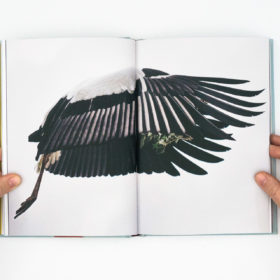
Tristan Plot is a bird educator; he prepares them to work with human beings in theatrical and dance shows or film documentaries and develops with them some “ornithotherapy” sessions with prisoners and people in distress. When he was a child, in the forest behind his parents’ house in the Touraine, Tristan noticed that, if he remained still for a long time, the animals came out of the vegetation and it was possible to observe them. Even today, this practice of slow approach, respecting the rhythm of nature, remains essential to his educational method. Since he studied ecology, biology and ethology at the university, he developed an educational technique at the intersection of imprinting, traditional training and « positive training”.
His method is a set of observation and predisposition of mind in harmony with the environment, according to the sensitivity of the other and in relation to expression and behaviour codes which are different from the human ones. Tristan, through the intuition of animality as something delicate, subtle and minimal, defines the relationship with birds as an exclusive bond able to reconcile the rhythm of the species with the individual one. His research is based on the understanding of the sensitivity of birds and aims to recover that ability, which got lost over the course of evolution, of perceiving the minimal variations and micro movements that are the expressive world of animals.
96 pages + 16
| Poids | 500 g |
|---|---|
| Dimensions | 14,8 × 21 cm |
Vous aimerez peut-être aussi…
Livre architecture, design & urbanisme
28,00 €
Le livre de Laurent Chardon Dédale regroupe différentes séries de photographies prises au cours des années 2003 à 2013 et documente un Paris et ses alentours en transformation.
Produits similaires
Livre Photo
20,00 €
SKKS est une partie du code que l’on retrouve sur les plaques d’immatriculation en Slovaquie.

25,00 €
La démarche photographique de Nicolas Savary et Tilo Steireif porte sur la représentation du politicien en tant que figure dans le système politique « de milice », en Suisse.
Livre Photo
17,00 €
l'intimité d'un couple français entre 1959 et 1978.
-20%
Livre art contemporain
Le prix initial était : 16,00 €.12,80 €Le prix actuel est : 12,80 €.
Combats polymorphes, divertissants, déraisonnables ou nécessaires
-20%
Livre Photo
Le prix initial était : 20,00 €.16,00 €Le prix actuel est : 16,00 €.
Ayline Olukman marche, roule, fait des rencontres
Livre Photo
35,00 €
Choisir de regarder Michel Journiac en travesti

Livre Photo
24,00 €
La région de Bugarach est aux sources de multiples récits et légendes populaires.
-20%
Livre paysage
Le prix initial était : 25,00 €.20,00 €Le prix actuel est : 20,00 €.
La poésie et le beauté des rivages