

-
×
 Délié - Baptiste Oberson
1 × 24,00 €
Délié - Baptiste Oberson
1 × 24,00 € -
×
 Artzines #12 Provo Special
1 × 10,00 €
Artzines #12 Provo Special
1 × 10,00 € -
×
 La Typographie post-binaire au delà de l'écriture inclusive - Camille Circlude
1 × 24,00 €
La Typographie post-binaire au delà de l'écriture inclusive - Camille Circlude
1 × 24,00 € -
×
 LSD n° 04 – A manga issue
1 × 14,00 €
LSD n° 04 – A manga issue
1 × 14,00 € -
×
 Rupture (fragments) - Benjamin Monti, Jean-Charles Andrieu de Levis
1 × 20,00 €
Rupture (fragments) - Benjamin Monti, Jean-Charles Andrieu de Levis
1 × 20,00 € -
×
 Paysageur n°3 - Mobiles
1 × 16,00 €
Paysageur n°3 - Mobiles
1 × 16,00 € -
×
 Assembly - Sam Porritt
1 × 22,00 €
Assembly - Sam Porritt
1 × 22,00 € -
×
 Halogénure #04
1 × 28,00 €
Halogénure #04
1 × 28,00 € -
×
 Un peu comme voir dans la nuit - Leif Elggren + CD
1 × 28,00 €
Un peu comme voir dans la nuit - Leif Elggren + CD
1 × 28,00 € -
×
 Good Company - Paul Van der Eerden
1 × 15,00 €
Good Company - Paul Van der Eerden
1 × 15,00 € -
×
 interférence - 2 - maycec
1 × 12,00 €
interférence - 2 - maycec
1 × 12,00 € -
×
 People in a faraday cage - Stéphanie Gygax
1 × 22,00 €
People in a faraday cage - Stéphanie Gygax
1 × 22,00 € -
×
![twen [1959–1971]](https://i0.wp.com/librairie-lame.com/wp-content/uploads/2024/12/f4.jpg?fit=250%2C373&ssl=1) twen [1959–1971]
1 × 28,00 €
twen [1959–1971]
1 × 28,00 € -
×
 La construction - Perrine Le Querrec
1 × 42,00 €
La construction - Perrine Le Querrec
1 × 42,00 € -
×
 Comment quitter la terre ? - Jill Gasparina, Christophe Kihm, Anne-Lyse Renon
1 × 10,00 €
Comment quitter la terre ? - Jill Gasparina, Christophe Kihm, Anne-Lyse Renon
1 × 10,00 € -
×
 The Shelf - Journal 3
1 × 20,00 €
The Shelf - Journal 3
1 × 20,00 € -
×
 Ar(t)chitectures situées - Étienne Delprat
1 × 29,00 €
Ar(t)chitectures situées - Étienne Delprat
1 × 29,00 € -
×
 Un cahier - Michel Quarez
1 × 12,00 €
Un cahier - Michel Quarez
1 × 12,00 € -
×
 Humoral Fortuities - Francesco Albano’s
1 × 12,00 €
Humoral Fortuities - Francesco Albano’s
1 × 12,00 € -
×
 Fluent - Laëticia Donval
1 × 17,00 €
Fluent - Laëticia Donval
1 × 17,00 € -
×
 Le singe et le bijoux - Roxane Lumeret
1 × 15,00 €
Le singe et le bijoux - Roxane Lumeret
1 × 15,00 € -
×
 movement in squares - Stefanie Leinhos
2 × 18,00 €
movement in squares - Stefanie Leinhos
2 × 18,00 € -
×
 Critique d'art n°54
1 × 16,00 €
Critique d'art n°54
1 × 16,00 € -
×
 Papier magazine n°06 - Coupe du monde
1 × 20,00 €
Papier magazine n°06 - Coupe du monde
1 × 20,00 € -
×
 Teddy et le Grand Terrible - Orian Mariat.
1 × 13,00 €
Teddy et le Grand Terrible - Orian Mariat.
1 × 13,00 € -
×
 Paravents - Eva Taulois
1 × 30,00 €
Paravents - Eva Taulois
1 × 30,00 € -
×
 Dernier royaume - Quentin Derouet
1 × 24,00 €
Dernier royaume - Quentin Derouet
1 × 24,00 € -
×
 WREK The Algorithm! - Aarnoud Rommens, Olivier Deprez
1 × 10,00 €
WREK The Algorithm! - Aarnoud Rommens, Olivier Deprez
1 × 10,00 € -
×
 Pectus Excavatum - Quentin Yvelin
1 × 8,00 €
Pectus Excavatum - Quentin Yvelin
1 × 8,00 € -
×
 Pas vu Pas pris - Collectif, Olivier Deloignon, Guillaume Dégé
1 × 25,00 €
Pas vu Pas pris - Collectif, Olivier Deloignon, Guillaume Dégé
1 × 25,00 € -
×
 Imagos - Noémie Lothe
1 × 20,00 €
Imagos - Noémie Lothe
1 × 20,00 € -
×
 12345678 - Maya Strobbe
1 × 20,00 €
12345678 - Maya Strobbe
1 × 20,00 € -
×
 UPO 1 - Earth Art - Rejane Dal Bello
1 × 25,00 €
UPO 1 - Earth Art - Rejane Dal Bello
1 × 25,00 € -
×
 Philonimo - Le Lézard de Heidegger - Alice Brière-Haquet, Sophie Vissière
1 × 9,00 €
Philonimo - Le Lézard de Heidegger - Alice Brière-Haquet, Sophie Vissière
1 × 9,00 € -
×
 Roven n°4
1 × 18,00 €
Roven n°4
1 × 18,00 € -
×
 Jean-Jacques a dit - Angèle Douche
1 × 5,00 €
Jean-Jacques a dit - Angèle Douche
1 × 5,00 € -
×
 Poèmes - Yvonne Rainer
1 × 14,00 €
Poèmes - Yvonne Rainer
1 × 14,00 € -
×
 Photographic Fields - Joël Van Audenhaege
1 × 25,00 €
Photographic Fields - Joël Van Audenhaege
1 × 25,00 € -
×
 Les Climats II (Japon) - Lola Reboud, Mariko Takeuchi
1 × 25,00 €
Les Climats II (Japon) - Lola Reboud, Mariko Takeuchi
1 × 25,00 €


La grande surface de réparation – Gilles Pourtier


20,00 €
Un an au 3 bis f, un centre d’art contemporain situé au cœur de l’hôpital psychiatrique Montperrin à Aix-en-Provence.
En stock
Textes de Jean-Christophe Arcos, Philippe Prost
Design : Bureau Wolewinski
Couverture souple
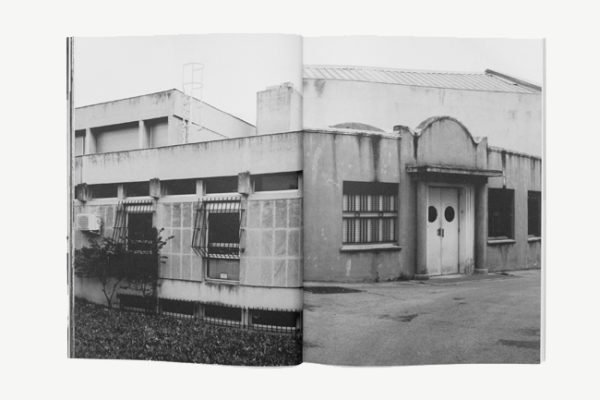
Gilles Pourtier a été accueilli pendant un an au 3 bis f, un centre d’art contemporain situé au cœur de l’hôpital psychiatrique Montperrin à Aix-en-Provence. La grande surface de réparation s’intéresse à ce lieu de soin et à son architecture sérielle, examinant les variations typologiques des pavillons où sont accueillis les patients.
Les photographies insistent sur le caractère répétitif et la production de masse de ces édifices, rapprochant cette esthétique industrielle des problématiques de l’art minimal. Gilles Pourtier développe également une série de dessins titrés Wunderblocks qui interroge la relation entre le bâti et les individus. La pluridisciplinarité, défendue dans cet ouvrage croisant dessins, photographies, architecture, permet d’apporter un regard nouveau sur le sujet de la psychiatrie en s’intéressant au rapport étroit entre des pathologies et des environnements. Les textes de Jean-Christophe Arcos (commissaire d’exposition) et de Philippe Prost (architecte) appuient et éclairent cette démarche tout au long de l’ouvrage.
Gilles Pourtier took part in a one-year artist’s residency at 3 bis f, a contemporary art centre located in the Montperrin psychiatric hospital in Aix-en-Provence. La grande surface de réparation (The Great Observation Box) focuses on this mental health institute and its serial architecture, examining the typological variations of the pavilions where the patients are admitted.
The photographs underline the repetitive nature and the mass production of these buildings, establishing a parallel between this industrial aesthetic and the issues of minimal art. Gilles Pourtier also developed a series of drawings entitled Wunderblocks that questions the relation between built environments and individuals. The multidisciplinary approach in this publication mixes drawings, photographs and architecture. It brings a new perspective on the subject of psychiatry by observing the close relationship between pathologies and environments. Throughout the book, the texts by Jean-Christophe Arcos (exhibition curator) and Philippe Prost (architect) complement and shed light on this process.
| Poids | 340 g |
|---|---|
| Dimensions | 19 × 26 cm |
Vous aimerez peut-être aussi…

Livre Photo
20,00 €
SKKS est une partie du code que l’on retrouve sur les plaques d’immatriculation en Slovaquie.

17,00 €
Dans la vallée de l’Agly, Gilles Pourtier et Anne-Claire Broc’h ont observé la géologie du terrain, au plus près du cours du fleuve.
Produits similaires

Livre Photo
17,00 €
l'intimité d'un couple français entre 1959 et 1978.
Livre Photo
17,00 €
Fluent de Laëtitia Donval est la deuxième des trois résidences initiées par Lumière d’Encre ↗ autour des fleuves côtiers des Pyrénées-Orientales
Livre paysage
25,00 €
Les Climats II (Japon), premier livre de Lola Reboud, a pour fil conducteur la relation que nous entretenons aux Climats.
Livre d'artiste
8,00 €
Le pectus excavatum, « thorax en entonnoir » est une malformation du thorax congénitale.

Livre Photo
25,00 €
Titanic Orchestra est une réaction instinctive à la vague de violence qui a frappé Paris en 2015.

-20%

Livre Photo
Le prix initial était : 38,00 €.30,40 €Le prix actuel est : 30,40 €.
Loose amid unique landscapes in a timeless bubble
Collage
20,00 €
Apparaissent des restes épars et altérés de photographies, cartes, paysages, empreintes, visages, corps et fossiles.