

-
×
 Dédale - Laurent Chardon
1 × 28,00 €
Dédale - Laurent Chardon
1 × 28,00 €


Outburst – Vincent Levrat


35,00 €
The images featured in this publication are the result of many days and nights enjoying a wasteland.
Rupture de stock
Wasteland, as a result of their emptiness and lack of purpose reveal themselves to be nonconforming to social norms. They thus represent locations for freedom and are conducive to the imagination. From this observation is born a desire to undergo a life experience in a waste ground, turning this location into a kingdom, an open-air studio. It becomes a playground where one may celebrate materiality and physical experimentation, a territory where one may escape the virtual and technological world. Wanting to operate a return to a form of simplicity, the naive desire to undergo a kind of « tabula rasa » is not without recollecting a kind of rebellion.
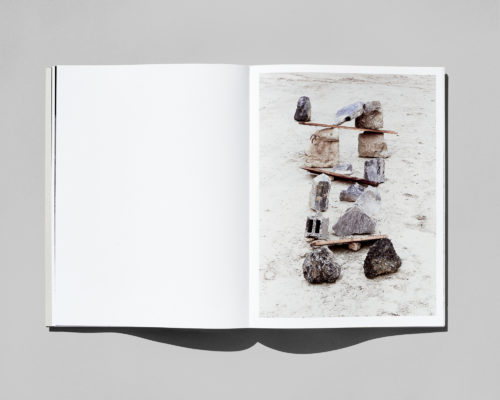
Constructing in order to destroy – all of which is bound to physical and intuitive experiences, which is somewhat absurd, yet resolutely childlike. From this emptiness which waste grounds can evoke, they are in reality a reserve of shapes and impoverished materials. An economy of means which, when nourished by the virtue of a childlike naivety, allow us to envisage these materials as the essence of various games and constructions.
64 pages, 23×30cm
Offset printing
Silkscreen cover
| Poids | 320 g |
|---|
Produits similaires
Livre architecture, design & urbanisme
28,00 €
Le livre de Laurent Chardon Dédale regroupe différentes séries de photographies prises au cours des années 2003 à 2013 et documente un Paris et ses alentours en transformation.

Livre Photo
19,00 €
L'image révèle autant l’artifice que la fascination qu’il exerce.
-20%

Livre art contemporain
Le prix initial était : 16,00 €.12,80 €Le prix actuel est : 12,80 €.
Combats polymorphes, divertissants, déraisonnables ou nécessaires

25,00 €
La démarche photographique de Nicolas Savary et Tilo Steireif porte sur la représentation du politicien en tant que figure dans le système politique « de milice », en Suisse.

Livre Photo
35,00 €
Choisir de regarder Michel Journiac en travesti

Livre d'artiste
8,00 €
Le pectus excavatum, « thorax en entonnoir » est une malformation du thorax congénitale.

Livre Photo
17,00 €
Raclose de Geoffroy Mathieu est la première des trois résidences initiées par Lumière d’Encre ↗ autour des fleuves côtiers des Pyrénées-Orientales
